
If you notice white spots on your shower door or your glasses are constantly cloudy, you probably already know that you have hard water.
And when you've lived with hard water for a long time, you might not even think twice about it anymore. You can easily get it the habit of reaching for that bottle of vinegar to soak the shower head every few months as part of your typical cleaning routine.
But have you ever wondered exactly WHY these white stains are happening? Let's take a closer look at what is happening with your water.
What is Hard Water?
Hard water is one of the most common water quality issues in the United States that affects millions of homes and businesses. The basic definition of hard water is that is has a significant amount of dissolved calcium and magnesium.
It picks up these minerals by dissolving the bedrock under the ground before the water is pumped up into your well or by the city to distribute.
Hardness is measured by Grains Per Gallon (GPG) or Milligrams Per Liter (mg/L). It's not a common unit of measurement for most of us, but think of it like this:
- 5 GPG of hardness is the size of 1 aspirin tablet dissolved into a gallon water jug
Most of the U.S. is dealing with at least 5 GPG of hardness. The map below gives you an idea on which areas are dealing with the highest level of hardness.
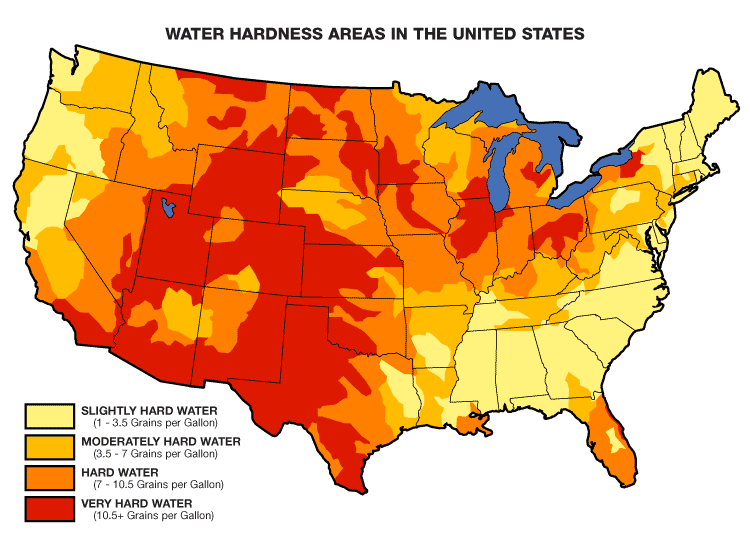
Map sources data provided by the United States Geological Survey
The map only shows levels over 10.5 GPG, but it's not unusual of parts of the Rocky Mountains area to be in the 40+ GPG levels. That would be 8 aspirin tablets in every gallon!
Where Do The Hard Water Spots Come From?
So, now that we know that hard water is carrying dissolved rock (calcium/magnesium), there's a couple of different ways the minerals create the white spots and staining throughout your home.
Evaporation
Pretty much any surface that gets wet in your home like sinks, faucets, and showers, is left to air dry in one way or another.
Each little droplet has the dissolved calcium in it. As the water evaporates, those minerals are left behind causing the white colored film.

Abrasion
The minerals in your water are called "hard" for a reason! Even if you're really good about drying your dishes right away, over time your glasses and cups will end up cloudy because they're essentially getting sand-blasted by the dissolved rock in your water.
You can wash the same dishes repeatedly and still feel like they never truly look clean. It's not because your dishwasher isn't working properly, it's your water that's causing the issue.
What About Limescale?
Scale buildup is the chalky clumps of mineral deposits that form when calcium and magnesium build up over time. You'll likely notice this scale on:
- Faucets
- Showerheads
- Coffee Makers
- Humidifiers

This caked on residue is the dissolved rock minerals reforming inside your home. The thicker layers are what usually need to be soaked in vinegar or other super strong cleansers to get it off the surface.
While you might not mind doing this kind of deep cleaning regularly, remember this is happening every where you use water. These areas are just the scale you can see. This is also happening inside your:
- Water Heater
- Washing Machine
- Pipes
- Dishwasher
- Ice Maker
As scale accumulates inside appliances, they need to work harder to perform the same tasks.
For example, a layer of scale buildup inside a water heater acts like a thick insulation between the heating element and the water. So it needs to stay hotter longer to get the water temperature up to a comfortable level.
The Best Solution for Hard Water
If you want to stop seeing the hard water spots, a water softener is the most effective answer.
Water softeners remove the calcium and magnesium as soon as the water enters your home. So every faucet and appliance is safe from mineral deposits.
Not only will you not have to deal with the white spots, you'll also enjoy:
- Softer Laundry
- Better Soap Performance
- Save on Energy Usage
- Healthier Skin and Hair
Hard water is one of the most common water quality issues in America, but it's also one of the easiest to treat with a high quality, low maintenance water softener.
To get a recommendation for a reliable water treatment professional in your area, Varsity Water Systems can point you in the right direction!